e-cigarette review NEWS: INDIA news

Popular Posts

Twitter Update

Welcome to My BLOG

Followers

Showing posts with label INDIA news. Show all posts

Wednesday, January 2, 2013

Naming anti-rape law after girl will be an honour: Family

"Wondering what interest is served by continuing anonymity of #DelhGangRape victim. Why not name&honour her as a real person w/own identity?" Tharoor asked on micro-blogging site Twitter.
BALLIA/NEW DELHI: The family of the Delhi gang-rape victim today said it had no objection to naming the proposed new anti-rape law after the girl, a day after Union Minister Shashi Tharoor mooted this proposal.

As Tharoor's suggestion triggered a debate, the Union Home Ministry gave indications that the revised law, which is expected to be stringent and facilitate speedier justice, is unlikely to be named after the 23-year-old girl who died last Saturday after battling for life for nearly two weeks.

Tharoor got support from former Uttar Pradesh Chief Minister Mayawati for his proposal made yesterday with the BSP supremo suggesting that an all-party meeting be convened for this purpose.

"If the government names the revised anti-rape law after her, they have no objection and it would be an honour to her". the father and brother of the girl told PTI at their ancestral village in Ballia in Uttar Pradesh.

"If her name is made public for this purpose, they have no objection to it," the girl's family said.

Mayawati when asked to comment on Tharoor's suggestion said, "If the family of the victim has given its approval to the law being named after the rape victim I have no objections to it."

"The Central government should convene an all party meeting and take a decision in consensus with everyone", she told reporters in Lucknow.

Home Ministry officials said the Indian Penal Code (IPC) and the Criminal Procedure Code (CrPC) do not have a provision for naming any law after an individual.

"No law has been named after any person in India. Neither the IPC nor the CrPC provides for that. One has to see the case in national perspective. The issue has wide repercussion while registering offences. This girl has been a catalyst to the changes in the anti-rape law but naming is not an option," an official said in New Delhi.

Tharoor, the Minister of State for Human Resources Development, had yesterday favoured making public the identity of the gang-rape victim wondering what interest was served by keeping her name under wraps.
Continue reading...

Wednesday, June 27, 2012

Jindal case: India's charge of Pak institutions involved in 26/11 rubbished

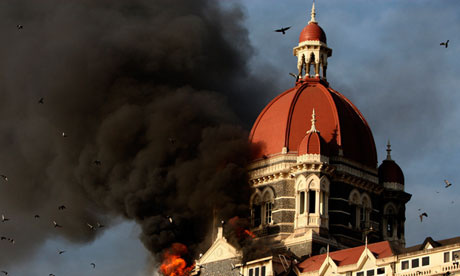
The Pakistan Government on Wednesday dismissed India’s charge of Pakistani state institutions being involved in the 26/11 Mumbai terror attacks.
Addressing media in Islamabad, the Pakistan Prime Minister’s Advisor in the Interior Ministry, Rehman Malik, termed New Delhi’s charges as “baseless”, and added that Islamabad would not investigate the Mumbai terror attack on the basis of evidences provided by New Delhi, as they were “not reliable”.
Defending Pakistan’s Inter-Services Intelligence (ISI), Malik rubbished 26/11 Mumbai terror attack plotter Syed Zabiuddin Ansari alias Abu Jindal's claims of the ISI being involved in the 26/11 attacks.
He said the ISI protects Pakistan and is not involved in carrying out terror strikes.
Malik squarely blamed Indian Home Minister P Chidambaram of "unnecessarily targeting the ISI", and claimed that all the allegations against Pakistan have been proven to be false till now.
He pointed out that Jindal was an Indian citizen (a resident of Beed in Maharashtra), and therefore, could not be said to be working on behalf of state or non-state actors from Pakistan.
"On previous occasions, when India accused the ISI of being behind the attacks, they were later proved to be wrong. Blaming someone is very easy, but proving is very, very difficult," claimed Malik.
Chidambaram had on Wednesday said that India had been on Jindal’s case for over a year, and the latter had admitted during interrogation by the Special Cell of the Delhi Police to the involvement of Pakistani state agencies in the 26/11 attacks.
Reacting to Malik's note on Tuesday, Chidambaram said that India was willing to share information about Jindal with Pakistan
Jindal was arrested at the Indira Gandhi International Airport on June 21 after being brought from Saudi Arabia, and is now in the custody of Delhi Police till July 5.
The Maharashtra Anti-Terror Squad (ATS) has now produced a production warrant in Delhi's Tis Hazari court for Jindal's interrogation.
The ATS wants to question him regarding the Aurangabad arms haul case of May 2006 and the German Bakery blast case of February 2010.
The ATS also wants to question him regarding the sleeper cells active in Maharashtra and about his alleged connections with the Indian Mujahideen.
The Indian Mujahideen was allegedly behind the 13/7 serial blasts in Mumbai in 2011 and the ATS had filed a charge sheet in the case last month.
Mumbai terror attacksThe National Investigation Agency (NIA) and the Intelligence Bureau are also interrogating Jindal. He has reportedly given inputs about the Lashkar-e-Toiba's sleeper cells in the country to the police, based on which, police teams will be carrying out raids across Maharashtra.
Police say Jindal used different names in each incident that he was involved in over the past six to seven years.
Continue reading...

Monday, June 11, 2012

Search warrant issued for Nithyananda


The police on Monday issued a search warrant for the arrest of controversial godman Nithyananda, who is reportedly absconding from his ashram at Bidadi in Ramanagara distict.

Chief Minister D V Sadananda Gowda told reporters after a high-level meeting with top police officials, including DGP Lalrokhuma Pachau, to discuss the clash that took place between the media and his followers at his ashram last week, that Nithyananda would be arrested in two days.

He said he has directed Regional Commissioner Shambhu Dayal Meena to submit a report to the government on the incident and also asked the DC and the Superintendent of Police to secure custody of the Dhyanapeetham premises, collect evidence about its activities and seal the ashram.

The government would hold discussions with the law department to seek cancellation of bail of the self-styled godman, who was granted bail by the Karnataka High Court in connection with a case of rape and criminal intimidation.

Nithyananda is facing criminal charges, including rape, on complaints from some former disciples last year. He was arrested and later released on bail.

On June, 8 police had lodged criminal cases against him and his followers for allegedly assaulting a mediaperson during a press conference at his Ashram.

The FIRs were filed on complaints from a regional TV channel reporter and activists of Nava Nirmana Sene in connection with an altercation at the ashram the previous night.

On a counter complaint by two followers of Nithyananda, police also registered two FIRs against the reporter and Sene activists for alleged outrage of modesty, physical assault and threat to life.

The reporter alleged he was assaulted and threatened after he asked a question at a press meet convened by the godman in the backdrop of charges of sexual abuse levelled against him by a US-based woman.


Continue reading...

Sunday, April 15, 2012

Is ‘Didi’ Headed For a Fall?

West Bengal Chief Minister Mamata Banerjee speaking  to the media in Kolkata, West Bengal on March 19, 2012. 
Aamra ekhon-o boli ni kon kagoj porte hobe, kintu agami dine kintu setao bole debo. (Till now, we haven’t told which newspapers must be read, but in the future, we will do that as well.) – West Bengal Chief Minister Mamata Banerjee, speaking on March 29 in defense of her government’s decision to bar all but 13 newspapers from more than 2,400 government-approved libraries across the state.
“Kunal Ghosh, associate editor of Sambad Protidin, a Bengali newspaper, Nadimul Haque, owner of the Urdu newspaper Akbar-e-Mashrique and Vivek Gupta, director of Sanmarg, a Hindi daily, have been nominated to the Rajya Sabha, the Upper House of Parliament, on Trinamool Congress tickets.”- Indian Express, March 18
Ms. Banerjee seems to have adopted a divide-and-rule strategy when it comes to managing her public image, using hostility on one hand and appeasement on the other to counter a recent flood of bad press. The combination of banning some of the state’s most widely-read newspapers from libraries, while naming journalists from favored papers to cushy political spots seems designed to improve her public image.
On Thursday, in perhaps her most iron-fisted attempt to date to take control of her public image, she even had a Jadavpur University professor of chemistry, Ambikesh Mahapatra, and his neighbor, Subrata Sengupta, arrested for making and circulating a mild-mannered cartoon of the spat between Ms. Banerjee and the former railway minister, Dinesh Trivedi.
Ms. Banerjee’s public relations strategy has turned the urban, intellectual, well-educated voters who once supported her, against her. But the minister’s problems may go far beyond the reaches of a public relations exercise, according to interviews with analysts, commentators, bureaucrats and legislators within her own Trinamool Congress Party.
They paint a picture of a chief minister for whom very qualities that won her the hard-fought state election, including a single-minded sense of purpose and indomitable fighting spirit, are becoming liabilities as she tries to govern. If the chief minister continues on this path, they say, her party could crumble, making it easier for the Communist Party of India, Marxist — which held West Bengal for decades — to make a return.
“She does not listen to anyone,” a Trinamool Congress legislator who joined the party more than three years ago, won over by her movement against land acquisition in Singur for Tata’s Nano factory, told India Ink on the condition of anonymity. “She just does what she feels like,” he continued. “Delegation of power is a no-no. She wants to do everything herself,’’ he said. “She does not trust anyone.”
“She is in a hurry, in a tearing hurry,” said a senior bureaucrat who has worked for the state government for more than 20 years. “And so, suffers from what you can term as ‘what-nextism.’ Every time she has to make a new promise, announce a new project, without even realizing the ground realities or the preparedness of the government.” In January she announced that the tenders for building the Subarnarekha Bridge had already been floated, when it wasn’t until Feb. 22 that the Planning Commission approved the project.
The senior leader of the Trinamool party, Subrata Mukherjee and the chief spokesman, Derek O’Brien, both of whom were regularly interviewed in the days before and after her victory, did not respond to numerous phone calls and e-mails seeking comment.
Armed with the mantra of “Ma, Mati, Manush” (mother, motherland and people) and the promise of “poriborton” (change), Ms. Banerjee came into power in style, with a historic electoral victory, putting an end to the 34-year-old Left rule in the state. “Saviour Didi” was soon credited for bringing in a new work culture, her poriborton mantra working a Midas touch even on the city’s film festival and book fair. Energetic and very hardworking, Ms. Banerjee said she dreams of turning Kolkata into London, complete with a Kolkata Eye just like the London Eye, and is painting the city blue to make it a Blue City, just as Jaipur is a Pink City, in order to build a global brand for the city.
Ms. Banerjee also made it clear early on that she hadn’t come to the top spot only to listen to others. Just 13 days after assuming office, she had the director of Bangur Institute of Neurosciences suspended for “insubordination and noncooperation” because he had dared to tell her that her entourage – which included five television crews and a host of print journalists – was causing problems for patients inside the hospital. The neurosurgeon, Dr. Shyamapada Ghorai, had six critical surgeries lined up for the next day, including a brain tumour removal, but he was suspended later in the night upon Ms. Banerjee’s orders.
Most recently, Ms. Banerjee stripped Dinesh Trivedi of his rail ministry for proposing what he said was a much-needed rise in fares in his Union Railway budget last month. Between Dr. Ghorai and Mr. Trivedi, she has randomly reshuffled portfolios of ministers, sometimes even without their knowledge, earning the wrath not just of the Congress party, an ally, but also sections within her own party. She even involved the state government in restructuring of portfolios at Kolkata Municipal Corporation, an independent body.
The seemingly random upheaval, combined with her perceived inability to listen to others or give them responsibility has turned supporters into critics in a remarkably short time.
The Trinamool Congress Party’s rule has become “anarchic” and “chaotic,” said social activist Anuradha Talwar, once a Banerjee sympathizer. “It is difficult to get her appointment. And without her we are unable to take up any issues with the government because she has not authorised anyone else for the job.”
A joke often heard in the corridors of power is : “If Ms. Banerjee is sick for a day or two, the state would take ill, too.” A phrase often repeated in the corridors of Writers Buildings, where the state’s bureaucrats work, is “Didi should not talk and let others do their work.”
The Trinamool Congress Party is now a head with no other vital organs, claims the author, filmmaker and columnist Ruchir Joshi, who chronicled her meteoric rise just a year ago. “It seems every decision, even at a panchayat or village level needs to be run past her,’’ said Mr. Joshi, who authored “Poriborton: An Election Diary.” He told India Ink from London, “MamBan,” as he refers to her, is “childishly megalomaniac and fascist of a different type.”
“The joke is there is now a new law in Bengal, ‘Didi bolechhey,’”Mr. Joshi said. The last part translates as, “Didi has said.”
“Defection from the T.M.C. ranks to the Congress could be a high possibility,” predicted Om Prakash Mishra, general secretary and spokesperson of the West Bengal Pradesh Congress Committee, which is affiliated with the Congress Party. “Intolerance and antagonism is a characteristic of her governance and shall spell disaster for her party and government,” he added.
Mr. Joshi agreed. “I see interesting new alliances forming in the near future, perhaps in one year or so,” he said. “Unless Mamata Banerjee’s learning curve shows a steep rise, which is unlikely, the political landscape of Bengal is in for more upheaval.”
While Ms. Banerjee’s critics are vociferous, some of her supporters are still big enthusiasts.
The state’s tourism minister, Rachpal Singh, whose car was attacked in a clash between two Trinamool factions last month, dismissed the criticism. “T.M.C. is a strong party and enjoys a huge mass support,” he said. “Ms. Banerjee has been a very successful chief minister.”
In the tourism department, for example, she “took the onus on herself to get the cooperation of other agencies and departments for an inter-disciplinary action to develop and promote tourism in the state.” The group plans to announce new tourism services soon, Mr. Singh said. “This is something that others had not been able to do earlier,” he said.
“She is very thorough in her work and that makes it tough to handle her because you got to do your homework really well,” Mr. Singh said. “She has tremendous energy and expects the same from others.”
Ms. Banerjee’s demanding, sometimes school-marmish demeanor has sparked laughter, as shown at an investors meet in January where she took a roll call of investors and foreign delegates, asking, “Are you interested in investing money in Bengal, or no. Yes? My China friends? Mr. Jindal, when will the industry be set up? We have done everything, now you hurry up too.”
But, ministers and bureaucrats who are at the receiving end of her often-public rebukes and reprimands, say her demanding, unpredictable nature is no joking matter. “She scolds us, and very badly,” said a senior bureaucrat. “It is difficult to predict her. She can be extremely mercurial, throwing files one moment and chattily cheerful the next.”
Ms. Banerjee’s gaffes and conspiracy theories in recent past have been a major source of embarrassment to the party and government officials alike, say party insiders and bureaucrats.
Whether it has been a case of rape, infant deaths in hospitals or farmers’ suicides, her response has been quick and nearly always the same: The issue is related to a conspiracy to malign the government. In the Park Street rape case, while her transport minister, Madan Mitra, raised questions on the victim’s character, Ms. Banerjee said the case was “concocted” to “malign” her government.
On the Katwa rape case, she went on to suggest that victim had staged the “drama” backed by the opposing Communist party because her husband belonged to the party. The woman’s husband had passed away 11 years ago.
In both cases, she was proven wrong by the police, who investigated and made arrests. But neither she nor anyone from her party apologized.
Trying to understand what makes Ms. Banerjee act the way she does has become something of an armchair sport. Many people cite her hard-won fight to the minister’s seat, which occupied the better part of 30 years and left her literally battered, with a fractured skull included among her injuries.
“Mamata Banerjee has always been someone in ‘opposition’, someone used to picking fights with the rest of the world as an underdog,” Mr. Joshi said. “She has no governing experience, nor, it seems, any serious vision. She’s still searching for enemies, for people who are against her, who she can fight. Having got into power now her fight is merely about how to stay in power,” he added.
“Street politics backed by populism seems to be her key. She’s a fighter without ideology and a very insecure person,” Ms. Talwar said.
This “fighting spirit” has trickled down the rank and file. On the rise are not only campus violence and attacks on teachers, but also clashes between the Trinamool party’s various factions. “The gunda politics, the thug culture of Bengal has only shifted loyalties” from the Communist party to Trinamool, Mr. Joshi said.
Whether the unrest Ms. Banarjee is stirring in her own party and among the educated middle-class and intellectuals will actually translate into a comeback for the Communist party is unclear.
“Didi has her math right where it matters, that is her vote bank in the rural areas of Bengal,” the Trinamool party legistlator said. “Her extreme populist measures, such as no price-hike policy, has kept them happy and will continue to do so.”
During last year’s election campaign, the legislator said, he met people who had never cast a vote in their life, thanks to the Communist Party of India, Marxist’s oppressive rule. “For these villagers Didi is goddess,” he said.
Industrial development, while a focus of her election campaign, is on a slow track — though she has taken some baby steps on land reforms — for it’s time now to focus on the villages. Perhaps with the upcoming panchayat elections in mind, the party is doling out sops to farmers and minorities, and announcing honorariums to imams.
At the same time, she seems to be quietly trying to appeal to the culture clan and intellectuals who once rallied behind.
In this year’s state budget the allocation of funds for information and culture was raised by 125 percent, the steepest in any section, to 110 crores, or 1.1 billion rupees, or $21.5 million. One of the main ways the money is to be spent is on awards for drama and music.
Continue reading...

Tuesday, March 6, 2012

Narendra Modi protests ban on cotton exports in letter to Prime Minister

Gujarat Chief Minister Narendra Modi
Gujarat Chief Minister Narendra Modi on Monday dashed off a letter to the Prime Minister protesting the ban on cotton exports announced by the Central government. In a strongly-worded letter, Modi has said that the Centre must refrain from "playing" with the economic interests of farmers of Gujarat, and demanded to know why decisions of such importance were taken without consulting the affected states.
"Such arbitrary decisions affect the economic interests of Gujarat cotton farmers the most. Immediately, revoke the ban imposed by the government of India on cotton exports," Modi said in his letter to the PM.
"Does the Centre have no regard for the rights of state farmers? By prohibiting the export of cotton, the UPA government is trying to make Gujarat farmers into paupers. This conspiracy by the UPA government against Gujarat farmers will cost the UPA dear," he further said.
Modi has pointed out that last year, a similar decision by the government cost farmers of Gujarat Rs.14,000 crore and a policy reversal at a later stage caused further losses when farmers were forced to sell their cotton at throwaway prices. "The Shankar variety of cotton from Gujarat must be kept out of the purview of such policies as it has a huge international demand. Gujarat contributed 116 lakh bales of cotton out of the 365 lakh bales India produces annually. When such a ban was imposed last year, China took great advantage of this move when the immense profits could have easily gone to the Indian farmers," Modi added.
This is the third objection by the chief minister to a policy decision of the Central government after National Counter Terrorism Centre (NCTC) and the changes in Railway Protection Forces (RPF) Act.
Although the Directorate General of Foreign Trade (DGFT) in the ministry of commerce announced the ban with immediate effect, agriculture minister Sharad Pawar was unaware of the move.
Pawar told reporters, "I have not heard about it and I am coming to know about it from you." Explaining the rationale for the ban, the textile ministry, which is also under the additional charge of commerce and industry minister Anand Sharma, said the decision was taken in view of exports in the current marketing year (October-September) exceeding the surplus by 10 lakh bales. Exportable surplus for year was pegged at 84 lakh bales.
Besides, the sudden rush for registration of export contracts was indicative of hoarding by Indian traders abroad, it said.
In some cases, letter of credits have been registered where the name of exporting and importing party is the same. This is indicative of a tendency of hoarding in bonded warehouses abroad.
A US Department of Agriculture report has lowered India's cotton production estimates by about 7.5 lakh bales to 342.5 lakh bales during the current marketing year (October-September). One bales contains 170 kg of cotton. In 2010-11, India's cotton production was 33 million (330 lakh) bales. The forecast has been downsized due to an estimated lower production in Maharashtra, where weather conditions have been less than favourable for the crop's growth.
India, the world's secondlargest cotton producer, has already exported 85 lakh bales as against 70 lakh bales last year. Textile mills consumption estimate has been revised up to 216 lakh bales for the current season from 210 lakh bales.
Continue reading...

Election results: Family matters - Yadavs take clear lead in UP; Badals may keep Punjab

New Delhi/Lucknow:  Mulayam Singh Yadav, 72, not Akhilesh Yadav, 39, will be the new Uttar Pradesh Chief Minister. The Samajwadi Party is home in UP, leading in 195 seats, within striking distance of a simple majority at noon. In Punjab, another father-son duo is making history - the Badals of the Shiromani Akali Dal seem set to get a majority, the first ever to keep power in the state. (Assembly Elections 2012: Live Trends)
 
The Congress and the BJP both admit some introspection is called for. The two national parties are slugging it out for top honours in Uttarakhand, but in neighbouring UP they are fighting for the number three and number four slot. The day's biggest loser, Mayawati, is a poor second in UP, with her BSP crawling up and stretching to touch 100 seats. In 2007, the BSP had 206 and became the first party since 1991 to get a majority on its own in UP. Mayawati will meet the Governor at 3.30 pm and is expected to resign. (Bad day for Congress, worse for the BJP?)

In Lucknow, Akhilesh Yadav, who attempted a successful image makeover for the SP, is the man of the moment. Underplaying his role, he said the entire SP had won the day together. He thanked the people for "believing in the SP...people across caste and community voted for the SP," he said.

Importantly, Akhilesh Yadav is not ruling out an alliance with anyone, including the Congress, yet to make up the numbers it could stop short of. "We will decide once we know our numbers," said the SP's UP president.  For his father, this will be a fourth term as Chief Minister. The dancing crowds and sea of red Gandhi caps outside the SP office in Lucknow tell that story; the deserted BSP office is a striking contrast. (For Akhilesh Yadav, mission accomplished)
 
The Congress' fortunes have swung wildly through the morning, but the report card so far reads - fighting for number three with the BJP in UP, down in Punjab, down in Goa, neck and neck with the BJP in Uttarakhand. And it is keeping Manipur. In UP the party has doubled its tally from the 22 it had in 2007.

In early trends, the BJP had seemed the surprise package of UP but is now settling down to a better-than-before-but-not-quite-there performance. Party leader Sudheendra Kulkarni described it as a "wasted opportunity." The Congress has doubled its tally of 22 in 2007, but is it of any consequence? Party spokesman Rashid Alvi said "whatever verdict has been given by the people, we have accepted....It was against our expectations and we will find out where we have gone wrong".

Rahul Gandhi's lieutenants in UP all prefaced counting day with the assertion that if Congress did well in UP,  it was the Rahul magic working. But if it failed, it was all their fault. UP Congress chief Rita Bahugana said that this morning. But these elections were a public test for Rahul's political equity and seven years of focusing on UP. Analysts say that the mandalisation of the Congress, which aggressively played the Muslim quota card, might have gifted it. (Will Congress admit Rahul Gandhi under-performed in UP?)

Punjab has a long tradition of voting out whoever is in power. The Shiromani Akali Dal looks poised to change that statistic now, but by the slimmest of margins. Akali ally the BJP has lost significantly in the state. But Captain Amarinder Singh, who said yesterday that he was cooking the Akali goose, may have to eat his words.

Goa saw a huge turnout - over 82 per cent. Poll pundits say that there could be a BJP comeback after five years of Congress-NCP rule. Very early trends from the two Goa centres are in keeping with that projection.

In Uttarakhand, the efforts and clean image of BJP Chief Minister BC Khanduri have been universally appreciated and though analysts across said the party might have brought him in too late to keep the state, the BJP and the Congress are neck and neck. Mr Khanduri was brought in by the BJP only in September last to try and obliterate the taints of corruption that the party needed to obliterate and the Congress has smelt a comeback chance in the hill state.

The Congress will keep Manipur. 
Continue reading...

Saturday, February 18, 2012

26/11: Delhi court admits chargesheet against Headley

David Headley
A Delhi court admitted the National Investigation Agency's (NIA's) chargesheet against Pakistani-American David Headley and eight others for terror strikes in India, including the 2008 Mumbai attack.
NIA Special Court Judge H.S. Sharma had reserved the order for February 18 after the prosecution concluded his argument.
The NIA earlier applied for sending letter rogatory - a letter of request - to a foreign government for help in investigation.
Three years after the 2008 Mumbai terror attack, the NIA on December 24 last year formally filed charges against seven Lashkar-e-Taiba (LeT) terrorists, including Lashkar founder Hafiz Saeed, Headley and two alleged officials of the Inter Services Intelligence of Pakistan for their role in the carnage. They have been accused of waging war against India.
Headley, who is undergoing trial in a US court, entered into a plea bargain with the American judicial authorities under which he cannot be extradited to any country, including India.
"The target of the LeT and officials of Pakistani army (who are accused in the case) were Indians and tourists. Their target was tourist places like Goa and Mumbai where they had done recce several times," said Special Public Prosecutor Dayan Krishnan.
Continue reading...

Mamata snubs Chidambaram; skips inauguration of NSG hub

Mamata snubs Chidambaram; skips inauguration of NSG hub
West Bengal Chief Minister Mamata Banerjee today skipped the NSG hub inauguration function attended by Union Home Minister P Chidambaram.
While her name was initially included in the brochure, it was subsequently deleted. Trinamool Congress leader and Minister of State for Shipping Mukul Roy attended the inauguration.
Under attack from non-Congress-ruled states over setting up of an anti-terror institution, home minister P Chidambaram on Saturday sought to reach out to them saying that the security of the country is a shared responsibility of the central and state governments.

"Security of the country is shared by the Centre and state governments. The Constitution of India assigns law and order to the state government and also assigns the Centre to protect the country against external aggression or internal disturbance," he said, speaking the inauguration of an NSG hub here, about 50 kms from Kolkata.

Chidambaram said the founding fathers of the Constitution were also wise when they made article 355. "That is why they made national security, internal security a shared responsibility."

"I have a responsibility to work with the states to quell terror, any militancy or rebellion," he said at the function, which was skipped by West Bengal chief minister Mamata Banerjee.

Banerjee has joined over half-a-dozen chief ministers of non-Congress-ruled states in opposing the Centre's plan to create a National Counter-Terrorism Centre (NCTC), claiming that it violated the federal provisions of the Constitution and was an attempt to usurp the states rights.

In his brief speech, Chidambaram did not refer to the controversy over the NCTC, nor did he make any comment on the chief ministers' opposition to it.
Continue reading...

Friday, February 17, 2012

BMC goes to Shiv Sena-BJP, NCP leads in Pune

BMC goes to Shiv Sena-BJP, NCP leads in Pune
The Bharatiya Janata Party-Shiv Sena combine is set to retain their dominance in the Mumbai civic polls, moving ahead of the Congress-Nationalist Congress Party alliance.
In what comes as a major setback for the Congress and the NCP, the BJP-Sena alliance is set to take control of the Brihanmumbai Municipal Corporation (BMC), the richest civic body of the country, with the help of independents.
The ruling alliance is also set to retain power in the Thane Municipal Corporation with the help of independents.
Elated by the performance of his party in the BMC polls, Uddhav Thackeray said that it was a "huge victory for the Shiv Sena".
He, however, refrained from making any comment on the performance of his estranged cousin Raj Thackeray and his party, Maharashtra Navnirman Sena (MNS).
Meanwhile, in Pune, the NCP is likely to emerge as the single largest party, but will be able to take the control of the civic body only with the help of the Congress.
BJP president Nitin Gadkari also saved his face in hometown Nagpur with his party leading over the Congress and the NCP.
The MNS, however, did not manage to shine much in the polls, as it was way behind the BJP-Shiv Sena combine and the Congress-NCP alliance according to the final trends.
As soon as the final leads began to suggest their surge ahead of the opposition parties, an elated Shiv Sena, which has kept the control of the BMC since 1996, began celebrating their win.
Shiv Sena spokesperson Sanjay Raut said, "Mumbai has voted for Shiv Sena."
MNS chief Raj Thackeray, however, made an attempt to put the blame on the low voter turnout. He said, "The Election Commission should do something about people who do not vote."
Talking about the good performance of his arch rival Shiv Sena, Thackeray said, "Shiv Sena has been saved by the BJP."
The leads/results certainly came as a big setback for Maharashtra Chief Minister Prithviraj Chavan, who had earlier claimed that Shiv Sena and its leader Bal Thackeray would be rendered irrelevant once the results were out.
Chavan had suggested that the Congress-NCP combine was banking on Raj Thackeray's MNS, which they expected would cut into the votes of the Shiv Sena-BJP alliance.
This was the first civic elections in Mumbai where the Congress was contesting in an alliance with the NCP.
What had prompted Chavan to cobble together an alliance with NCP for the Mumbai civic body poll was the fact that in the last elections, the votes polled by the Congress and NCP, which had then contested the BMC poll separately, if added, would have yielded 132 seats. "Hence, getting a simple majority of 114 seats in the 227-member BMC should not be difficult," Chavan had said.
Meanwhile, according to the leads on all the 227 seats in the BMC, the BJP-Shiv Sena combine has bagged 106 seats, which is just 8 short of the majority, the Congress-NCP is slated to win on 66 seats, while the MNS and others are likely to get 28 and 27 seats respectively.
Continue reading...

Rs. 5 lakh as compensation to families of fishemen

The Cabinet on Thursday decided to grant Rs. 5 lakh each as solatium to the families of two fishermen who were killed by gun fire from Italian ship on Wednesday.
The government will also meet all expenses for preferring legal claims against the owners of the ship, Chief Minister Oommen Chandy said in an official release here on Thursday.
The release said that the Cabinet had also decided to recommend to the Governor the convening of the Assembly from March 1.
Continue reading...

Mumbai civic polls: Shiv Sena-BJP set to retain power

Mumbai: Counting of votes for the richest civic body in India, Brihanmumbai Municipal Corporation (BMC) indicated that the leads were in favour of the Shiv Sena-BJP alliance. However, it looks unlikely for the combine to be able to hold a majority.
The trends indicate a hung civic body in Mumbai, which could bring Raj Thackeray's MNS and independent candidates into the limelight. The Sena-BJP alliance looks set to retain power with the help of independent candidates.
Raj Thackeray also plays a crucial role. If Raj decides to go with the Shiv Sena-BJP alliance, the combine will retain the BMC easily. This may prove be a major setback for the Congress-NCP alliance as it may need the support of not just MNS, but also the independents to attain a majority.
Mumbai civic polls: Shiv Sena-BJP set to retain power
CNN-IBN
Chief Minister Prithviraj Chavan, who had claimed before the polls that Shiv Sena and its leader Bal Thackeray will be rendered irrelevant once the results were out, seems to have overestimated the Mumbaikar's eagerness to get rid of the 16-year "misrule" of the saffron alliance.
This is first time that the Congress was contesting the BMC polls in an alliance with the NCP. What had prompted Chavan to cobble together an alliance with NCP for the Mumbai civic body poll was the fact that in the last elections, the votes polled by the Congress and NCP, which had then contested the BMC poll separately, if added, would have yielded 132 seats. "Hence, getting a simple majority of 114 seats in the 227-member BMC should not be difficult," Chavan had said.
Chavan had been saying that MNS support base, which has widened markedly since the 2007 BMC poll, would benefit the Congress-led Democratic Front, as the Raj Thackeray-led party would into eat into the Sena-BJP votes as in the past.
Meanwhile, the Shiv Sena-BJP combine is also set to retain Thane as the alliance took the top spot in the Thane Municipal Corporation poll.
Out of the 130 seats, Congress and the NCP alliance bagged 52 and the Shiv Sena and BJP alliance 61 seats.
In Pune, the NCP is likely to emerge as the single largest party, but will also need the support of the Congress.
The BJP maintained its lead over the Congress and the NCP in party President Nitin Gadkari's home city Nagpur.

Seats
Congress +
Shiv Sena +
MNS
Others
Mumbai
225/227
66
104
27
28
Seats
Congress
NCP
Shiv Sena
BJP
MNS
Others
Pune
87/152
17
33
05
13
17
01
Thane
130/130
18
34
53
08
08
09
Nagpur
56/145
15
01
04
25
01
10
Nashik
62/122
10
15
08
07
19
03
Continue reading...

Mamata is in Group of 5 who oppose centre's new counter terror body

Bhubaneswar:  It's not exactly a good Friday for the Congress. In Mumbai, it's performance in the local elections has been below average. And on the national landscape, it's staring at another huge confrontation with state governments that are run by opposition parties, and its Frenemy No. 1, Mamata Banerjee.

Five chief ministers including Ms Banerjee are objecting fiercely to the new National Counter Terrorism Centre.  They say the centre's blueprint violates the principles of federalism by encroaching upon state government turf. Those on the same side as Ms Banerjee include Bihar's Nitish Kumar, Tamil Nadu's J Jayalalithaa, Odisha's Navin Patnaik. From Gujarat, Narendra Modi will write to the Prime Minister today, expressing the same concerns. "Any self-respecting chief minister would oppose this," said Mr Patnaik.

Ms Banerjee shared the stage with Finance Minister Pranab Mukherjee at function in Bengal today.  As his party's trouble-shooter-in-chief, Mr Mukherjee may well have a new assignment.  In a letter dated February 14, Ms Banerjee has asked the Prime Minister to "review and withdraw" the order that sanctions the new anti-terror agency.

She wrote, "It is difficult for the state government to accept such arbitrary exercise of power by the central agency, which have a bearing on the rights and privilege of the states as enshrined in the Constitution."

The Home Ministry's response today was not placatory. "We are not passing any new law," said Home Secretary RK Singh.  There was no need consult the states prior to notifying the National Counter Terrorism Centre.  It has been formed for better coordination among agencies to fight terror better. "

The Counter Terrorism Centre, which will become functional on March 1, will have the power to swoop into any state, arrest suspects and fly them out of the state; it will not be obliged to consult the local government. Law and order is a state subject in India.  The new agency will keep state police in the loop but need not seek permission from state governments before launching any operation.

Of the group of five chief ministers that interpret the new body as a violation of the rights of states, it is Ms Banerjee's criticism that no doubt rankles the most.  She is a senior ally of the coalition at the centre; that hasn't stopped her from siding often with opposition parties, in Parliament and outside, on some of the government's biggest new policies.  Her anger over attempts to introduce reforms in the retail sector forced the government into a humiliating retreat days after announcing its new guidelines.

It's not just her opposition but the company that she is keeping that has the Congress in knots. Ms Banerjee has met recently with the BJP- both sides described it as a courtesy call, but there is talk of a political flirtation.  Mr Patnaik heads the Biju Janata Dal, which is part of the BJP-led NDA;  Ms Jayalalithaa and the BJP have been expressing support for each other, most visibly with delegates from both parties attending functions organised by  her and Mr Modi in their home states;  Mr Nitish Kumar is a leader of the JD (U),  which is again a part of the NDA.

So speculation is surging about whether Ms Banerjee is using the campaign against the Counter Terrorism Centre to test-run a wider partnership.
Continue reading...

Sunday, February 12, 2012

‘India should have reacted strongly, must seek probe’

FP
A day after he met the special Indian envoy sent by Prime Minister Manmohan Singh, deposed Maldivian president Mohamed Nasheed told The Sunday Express that New Delhi should demand an independent inquiry into the “coup” and said he was disappointed that India did not make the correct judgement on the matter.
“There is a strong need for an inquiry into the circumstances that led to the coup. I think India should make this point,” Nasheed said even as his successor announced that he would order an independent probe.
Nasheed, who said on Friday that he “understood” New Delhi’s political compulsions and was not disappointed with its reaction, changed his position on Saturday after meeting special envoy M Ganapati. He was more critical of India’s stand, but refrained from taking a very strong position.
“(We believed) that India would have had a very proper understanding of the issue as they have all information as well as intelligence (inputs) to make the right judgement. It is disappointing when you find it is not so,” Nasheed said.
The former president has protested over what he terms as a bloodless coup that “illegally” removed him from office. He has demanded an international scrutiny into the circumstances that led to his ouster on Tuesday.
Nasheed, who was close to the Indian leadership, said his party expected a “more robust, more strong” reaction by India, adding that New Delhi should have made its voice heard during the crisis. He said that there is still scope for India to change its stance of welcoming and supporting the new government under President Mohamed Waheed. 
“In the first flash (of reaction) there was a bit of a misunderstanding. US had the same stand but they backtracked a bit. India should also not hesitate to do this. It has not made the best start but changes can be made,” Nasheed said.
While Nasheed had refrained from commenting on India’s role so far, his change of stance is being seen as a sign that New Delhi has made its position clear that it believes in the legitimacy of the present government.
New Delhi is of the opinion that the change of power was conducted in a politically conducive manner and within the framework of the Maldivian government. Nasheed, however, said on Saturday that his removal took place almost at gunpoint and that his life was threatened before he handed in his resignation.
Sources said India, however, has made its position clear that the change in leadership is part of the political process and was, in fact, inevitable as Nasheed’s government had lost power in Parliament. The Indian view has been that Nasheed’s Maldivian Democratic Party was on its way out and a legitimate opposition group, led by Waheed, came to power.
Continue reading...

While Anna fights Govt, Culture Ministry lists him for Gandhi Prize

Two months after Anna Hazare brought the UPA government to its knees, the Ministry of Culture included his name in the list of probables for the 2011 Gandhi Peace Prize. But the Prime Minister’s Office has withheld the list and has sought more names.
“The list of nominees has not been sent to the jury as the PMO is unhappy with the present nominations and wants more names,” said a government official. Culture Minister Kumari Selja recently wrote to jury members seeking nominations for the prize.
FP
This is the first time that the jury is being asked to send their choices as the code of procedure for the award says that former members of the jury, among others, were competent to send nominations.
Sushma Swaraj, a jury member because of her position as the Leader of the Opposition in the Lok Sabha, confirmed that she received the letter last week. “I got a letter from Selja saying that they have not received my nomination and that I should send it,” she said.
She was unaware of any list from the ministry or the fact that she was a jury member. “In that case, my sending a name would be a conflict of interest. I would be sending a name and deciding on it,” she said.
Shyam Benegal, noted filmmaker and Rajya Sabha MP, expressed similar consternation. “I have not been informed (of being a jury member). Selja’s note also came to me but I have no clue as to who should be nominated. I, really, am incapable of doing it considering it is given to world leaders. I can’t think of anybody of that stature.”
Interestingly, the ministry’s list, culled from nominations, had more than a dozen illustrious names besides Kisan Bapat Baburao Hazare, better known as Anna Hazare. It includes Nobel Peace prize winner Aung
San Suu Kyi, Bangladesh prime minister Sheikh Hasina, former President APJ Abdul Kalam, Rajya Sabha member Karan Singh, agriculture scientist M S Swaminathan and the late singer Bhupen Hazarika, among others.
Selja and Culture Secretary Jawahar Sircar were not available for comment.
The official said that the proposal has been languishing in the PMO since end-October when it was sent by the ministry. The award is usually announced in November and conferred in January.
Other ‘competent persons’ who can suggest names are the past awardees, Members of Parliament, Nobel laureates, heads of international peace bodies, presidents, governors, vice chancellors and heads of Indian missions abroad, among others.
Once cleared, it goes to the jury which, this year, comprises Benegal and Infosys mentor N R Narayana Murthy besides three ex-officio permanent members — the Prime Minister, Chief Justice of India and the leader of the Opposition in the Lok Sabha.
The International Gandhi Peace Prize, named after Mahatma Gandhi, was awarded annually until 2005. Launched in 1995 on the occasion of the 125th birth anniversary of Mahatma Gandhi, it is given to individuals and institutions for their contributions towards social, economic and political transformation through non-violence and other Gandhian The award carries Rs 1 crore in cash, a plaque and a citation.
Continue reading...

Oppn raises pitch, wants PM to sack Khurshid

New Delhi: Hours after Election Commissioner wrote a letter to President Pratibha Patil against Union Law Minister Salman Khurshid, the BJP on Saturday said the minister had no right to continue in the government. The main Opposition said an 'unprecedented situation had been created' with the poll body constrained to seek intervention of the highest constitutional authority over Khurshid's repeated violation of the model code of conduct.
"We demand his immediate sacking from the Union Cabinet and ask the Prime Minister to clarify the stand of the government," said BJP vice president Mukhtar Abbas Naqvi who had earlier complained to the EC against Khurshid's defiance despite his censure by the poll body.
The Election Commission on Saturday sought the 'immediate and decisive' intervention of President after it charged Khurshid with 'improper and unlawful' defiance of its orders under which he was censured for promising sub-quota for minorities.
Oppn raises pitch, wants PM to sack Khurshid
The move comes after Khurshid had dared the Election Commission to act against him over his comment on Muslim sub-quota. Khurshid had said, "They can hang me if they want, but I will continue to ask for reservations for pasmanda Muslims."
The Election Commission said that it was shocked that Khurshid chose to be defiant and aggressive.
Sources said that the President has forwarded the Election Commission's letter to the Prime Minister's Office (PMO) for appropriate action.
Sources in the Election Commission said that the commission even considered countermanding elections in Khurshid's wife's constituency Farrukhabad.
The Samajwadi Party (SP) reacting to the Election Commission's letter said, "Law Minister is trying to demolish the structure of the democracy."
BJP leader Sushma Swaraj on social networking site twitter said, "We request the President to withdraw her pleasure and dismiss Shri Salman Khurshid as a Minister of the Union Cabinet for acting against EC."
In a not-so-veiled attempt, Khurshid earlier took on the Election Commission in Farrukhabad.
"I don't have permission to talk about the rights of minorities. I was attacked for promising them their rights. They can hang me for standing up for the minorities," said the Congress leader.
BJP spokesperson Balbir Punj hit out at Khurshid saying it was unfortunate that a minister was undermining the authority of a constitutional body.
"It is really unfortunate that of all the people, the Law Minister of the country, Mr Salman Khurshid, is not only challenging the authority of the Election Commission of India but also undermining its authority," said Punj.
In its letter, Chief Election Commissioner SY Quraishi wrote, "The Commission is approaching you with serious dismay and a deep sense of urgency that requires your kind intervention in the midst of the poll process in the state of Uttar Pradesh. The Union Minister for Law and Justice and Minority Affairs, Salman Khurshid, who is also a leader of the Indian National Congress Party, had made certain statements and announcements during the course of his campaign in the state. One of them was to the effect that the Congress would provide a quota of 9 per cent reservation to the minorities within the existing quota of 27 per cent for OBCs. He also indicated that Muslims having a sizeable population will be benefited from this move. Following complaints received from a political party that such announcement was a violation of the Model Code of Conduct, the Commission, after due notice and hearing, passed an order on February, 9, 2012 that Khurshid had indeed violated the MCC. The full Commission hence deliberated on the matter in an emergency meeting, this afternoon, while being concerned about the fact that Khurshid’s action could vitiate free and fair poll in Uttar Pradesh."
Never before has the Election Commission sought Presidential intervention to rein in a Union Minister in the middle of a crucial election and the Election Commission's decision is bound to embarrass the government and the Congress.
Khurshid, while campaigning for his wife Louise, who is a Congress candidate from Farrukhabad Assembly constituency in Uttar Pradesh, had promised the electorate last month that the party would increase the sub-quota for minorities to nine per cent, out of the 27 per cent Other Backward Classes (OBC) reservation.
Continue reading...

Wednesday, February 8, 2012


Rahul Gandhi may have been projected as the Gandhi scion wanting to follow in his grandmother's footsteps to become the Prime Minister of India, but it's sister Priyanka Gandhi who's giving us the chills by looking eerily similar to Indira. Photo: PTI

Priyanka? Indira? Who can tell?Priyanka, who normally sports western styles while hobnobbing with socialities and the political class in Delhi, has been seen in only cotton or khadi saris all during Congress rallies across UP. Photo: PTI
 Priyanka? Indira? Who can tell?The similarities are uncanny. Both Indira and Priyanka seem to have a fondness for similar colours (vibrant hues like orange, purple and green), part their hair the same way and even Priyanka doesn't seem to mind that her gray hair is showing.
Priyanka? Indira? Who can tell?Priyanka, who has always maintained that her children are her priority, recently told reporters that she will do anything to help her big brother Rahul win the elections. In fact, the Uttar Pradesh campaigning even saw her husband Robert Vadra claiming that he was ready to join politics too. So will this be Priyanka first step into the political wilderness? Photo: PTI
 Priyanka? Indira? Who can tell?If Priyanka does join politics, comparisons between her and her grandmother are bound to crop up. She, like her grandmother, has the gift of the gab and has always been seen has the smarter of the two Gandhi siblings. Might Rahul just have to make way for India's second female prime minister? Photo: PTI
 Priyanka? Indira? Who can tell?
Continue reading...

Monday, February 6, 2012

Report hints at ‘collusive behaviour' in Antrix-Devas deal

File photo shows Antariksh Bhavan, which houses the Antrix Corporation in Bangalore.
In their stinging indictments, two government-appointed committees, set up to scrutinise the Antrix-Devas agreement, have highlighted serious procedural lapses on the part of, and policy violations by, senior scientists of the Indian Space Research Organisation (ISRO), all of which benefited a private company.
The deal reflects “not only serious administrative and procedural lapses but also a suggestion of collusive behaviour on the part of certain individuals,” says the report of the high-level team, headed by the former Central Vigilance Commissioner, Pratyush Sinha, submitted to the government in September last. The second team, a high-power review committee comprising B.K. Chaturvedi and Roddam Narasimha, submitted its report in March last.
Under the January 2005 agreement between the Antrix Corporation, marketing wing of ISRO, and the Bangalore-based Devas Multimedia Private Limited, Devas was allowed unrestricted use of 70 MHz of the scarce S-band spectrum from two exclusive satellites.
The former ISRO Chairman, Madhavan Nair, the former Scientific Secretary at ISRO, K Baskaranarayana, and the former managing director of Antrix Corporation, K.R. Sridharamurthi, were “mainly responsible for leading the Department of Space and Antrix into this arrangement,” says the Pratyush Sinha report.
K.N. Shankara, former director of the ISRO satellite centre, who headed the committee to examine the proposal, is “guilty of not considering all the implications of the agreement he was recommending.”
The Pratyush Sinha report lists another four bureaucrats “found responsible for the acts of omission:” the former Member (Finance), Space Commission, S.S. Meenakshisundaram; and three former Additional Secretaries of the Department of Space, Veena S. Rao, G. Balachandhran and R.G. Nadadur.
The reports cite examples of how information was concealed, facts were obfuscated, and cost calculations even “dissimulated.”
For example, the Cabinet and the Space Commission were kept in the dark about the deal, and the approval process was “riddled with incomplete and inaccurate information,” says the Pratyush Sinha report.
Continue reading...

Friday, February 3, 2012

Soni justifies Govt seeking 2nd AG opinion on army chief's age

Justifying government action in seeking second legal opinion from the Attorney General on Army Chief General V K Singh's age row, Information and Broadcasting Minister Ambika Soni today said it was done in view of fresh material and points coming up on the issue. "As far as we know, his (AGs) legal advice was sought again as some new things had come up on the issue and placed before him.... When an opinion is sought for the second time, naturally fresh material and points are put forth the Attorney General. In view of that a second opinion is often sought, which must have been done," said Soni.
Soni's justification comes in the wake of the Supreme Court questioning the government's action of seeking the Attorney General's opinion the second time on the issue. The Court has deferred the hearing in the case pertaining to the Army Chief's age row to February 10.
Soni maintained that the Attorney General is the highest legal authority to give legal opinion to the government and appealed to the political class to adopt restraint while commenting on the issue and not involve the forces in settling political scores.
"My appeal to political colleagues across the board is that we all have high esteem for the armed forces without exception... And, I think at this stage also, we political people must also bring some restraint on our reaction so that we don't involve the armed forces in our political scuffle...," said Soni.
She said that the armed forces have always played a role which has been admired, appreciated and held in high regard by people of this country, even as traditionally, as a matter of principle, the armed forces have kept themselves totally away from any kind of political opinion or bias.
Continue reading...

Thursday, February 2, 2012

Rs 13k cr scam in national solar plan, claims CSE


NEW DELHI: In violation of norms laid down by the government, a single company, Lanco Infratech has allegedly cornered 40% of the contracts bid out for the first phase of the National Solar Mission, garnering 235 mw worth projects with assured revenue of Rs 13,000 crore over the next 25 years including a large subsidy that the consumers will end up paying.

Delhi-based Centre for Science and Environment on Wednesday released documents showing how the company allegedly created fronts to side-step the rules and win much more than the 105 mw worth contracts it was legally allowed to.

The Jawaharlal Nehru National Solar Mission is meant to install 20,000 mw of grid-connected solar power by 2022. In its first phase, 1,000 mw worth of projects were to be bid out by 2013. In the first batch of the bidding process, 150 mw of solar PV plants and 470 mw of solar thermal power plants were bid out with no company (including its affiliates, subsidiaries etc) permitted to bid for more than 5 mw of solar PV and 100 mw of solar thermal each.

"These guidelines were blatantly flouted by Lanco Infratech. This company floated front companies and grabbed no less than nine projects worth 235 mw. This is about 40% of the 620 mw worth of projects auctioned by the government during the first batch of the first phase of the Solar Mission," CSE said.

The documents released by CSE showed that the companies' balance sheets were beefed up just in time to meet the bid requirements. The final date was also delayed to adjust one particular case. The bids were almost identical with a 5 paise difference in the discount rate proposed.

CSE said besides the two disclosed Lanco group companies, "all (other) seven companies had Rs 1 lakh or Rs 10 lakh in equity, no assets or reserves from the past; all were created for the bidding process; all companies increased their authorized amount of shares and then issued preference shares on the same day (December 31, 2010); the shares did not go to Lanco directly, but showed up in its annual report. Then all Lanco and front companies bid for the PV projects in a unified fashion, quoting similar tariffs with 5 paise jump between each bid."

CSE gave details of how project reports of all projects were identical and the land agreements for the legally distinct and differently owned projects were signed with the government by one person - a Lanco employee. It claimed that seven more companies besides those shown as bidders had direct links with Lanco -- "some had Lanco employees and their family members as directors, while others have strong commercial ties to the company. Lanco's own annual report indicates that all the seven are firmly in its control".

Six of these companies initially proposed one site and the two proposals for solar thermal were proposed at one site. But the eventual site for all none projects ended up contiguous to each other in one single village Askandra in Jaisalmer. Lanco also got the Engineering Procurement and Construction contract for all the projects.

While the ministry of new and renewable energy is the regulatory ministry, the entire operation comes under a subsidiary of NTPC -- NTPC Vidyut Vyapar Nigam Limited (NVVN).

When contacted, MNRES secretary Girish Pradhan told TOI, "The entire process is being done by NVVN, we only set the rules. Now that the information has come out, we will investigate it in depth and no violation or deviation from norms will be tolerated."

NVVN provided a statement to TOI which said, "There is no bar in the guidelines for a company to be EPC contractor in more than one project. After signing the power purchase agreements, we noted that controlling shareholding in some of the companies appeared to have changed which was in violation of guidelines. After obtaining legal opinion on the issue, we issued notice of default to such companies. Companies stated that they had not violated the provisions of guidelines and it was a matter of interpretation. However, in order to resolve the issue, the concerned companies finally rectified the default."

NVVN refused to reveal the name of the companies that were found in violation of the bidding rules or where it had got the legal advice from.

Lanco said it "objected to" CSE's statements which it claimed were "wrongly perceived" and not cross-checked with the company. CSE said it had repeatedly tried to solicit comments from the company.

Lanco further said, "Lanco Group has equity participation in few of the companies that have won the National Solar Mission projects in 2010. Equity participation of Lanco is within the permissible levels. The bidders who Lanco supported were able to bid at one of the lowest tariffs as Lanco provided them the latest technology and complete EPC solutions for the projects. As the power purchase agreement (PPA) for these projects are for a period of 25 years, Lanco's equity participation in these projects also brings confidence to the bidder to use our technology and EPC solutions in arriving at such a competitive tariff."


Continue reading...

Wednesday, February 1, 2012

'Indian Army preparing for limited conflict with China'

Noting that India is increasingly getting concerned about China's posture on its border, a top US intelligence official on Wednesday said that the Indian Army is strengthening itself for a "limited conflict" with China.

"Despite public statements intended to downplay tensions
between India and China, we judge that India is increasingly concerned about China's posture along their disputed border and Beijing's perceived aggressive posture in the Indian Ocean and Asia-Pacific region," Director of National Intelligence James Clapper said in his prepared testimony before the Senate Select Committee on Intelligence.
"The Indian Army believes a major Sino-Indian conflict is not imminent, but the Indian military is strengthening its forces in preparation to fight a limited conflict along the disputed border, and is working to balance Chinese power projection in the Indian Ocean," he said.
India, Clapper said, has expressed support for a strong US military posture in East Asia and US engagement in Asia. He said China in 2011 appeared to temper the assertive behavior that characterised its foreign policy the year before, but the internal and external drivers of that behavior persist.
"Moreover, although Chinese leaders have affirmed their commitment to a peaceful and pragmatic foreign policy - and especially to stable relations with China's neighbours and the rest of the world - Beijing may take actions contrary to that goal if it perceives that China's sovereignty or national security is being seriously challenged," he said.
Many of Beijing's military capability goals have now been realised, resulting in impressive military might.
Other goals remain longer term, but the Chinese army is receiving the funding and political support to transform it into a fully modern force, capable of sustained operations in Asia and beyond, he said.
Continue reading...
Related Posts Plugin for WordPress, Blogger...
 

NEWS Copyright © 2009 Not Magazine 4 Column is Designed by Ipietoon Sponsored by Dezigntuts